
Have you ever typed a sentence, paused, and stared at one word wondering if it looks right? Seamless vs seemless is one of those quiet little traps in English. The two words sound almost identical when spoken aloud, yet only one of them actually exists in the dictionary. If you have ever second guessed yourself in an email, a blog post, or a school assignment, this guide will settle the question for good.
By the end of this article, you will understand exactly why seamless vs seemless confuses so many writers, which spelling is correct, and how to remember it permanently without having to think twice again.
Seamless vs Seemless: Quick Comparison
Before diving into the details, here is a simple side by side breakdown that answers the seamless vs seemless debate in seconds.
| Feature | Seamless | Seemless |
| Correct spelling | Yes | No |
| Found in dictionaries | Yes | No |
| Root word | Seam | Seem (incorrectly combined) |
| Meaning | Smooth, without interruption | No meaning, spelling error |
| Use in formal writing | Recommended | Should be avoided |
| Common in casual typing | Sometimes misused | Frequently mistyped |
This table makes the seamless vs seemless comparison clear at a glance, but let us look at why the confusion happens in the first place.
Is it seemless or seamless?
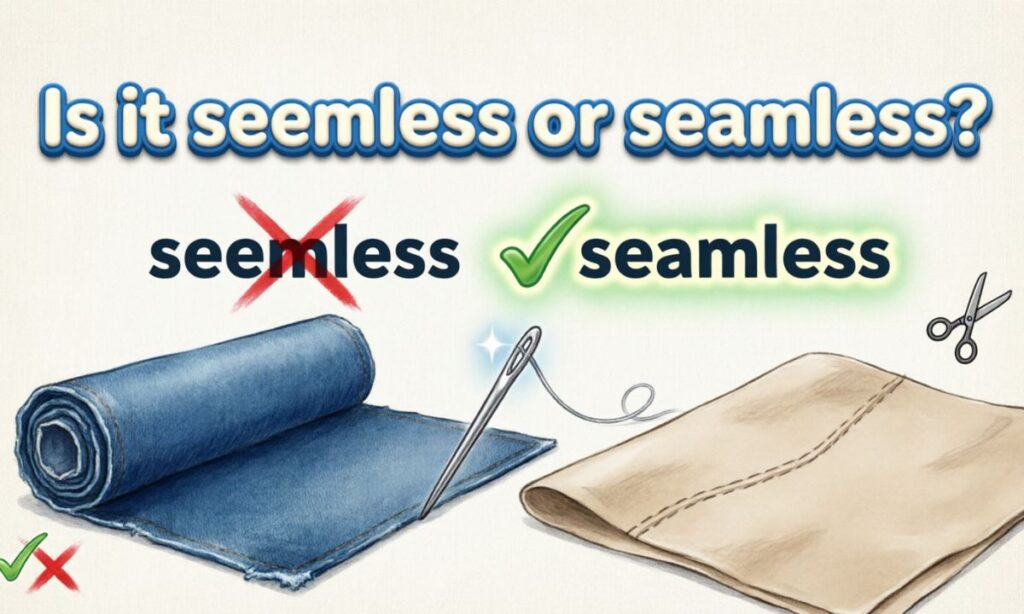
The short answer to seamless vs seemless is simple: seamless is correct, and seemless is not a real word. Many people write seemless because it sounds exactly like seamless when spoken quickly. The brain hears the same sound and assumes either spelling could work, but English grammar does not allow for that kind of guesswork.
Seamless is built from the word seam, which refers to a line where two pieces of fabric or material are joined together. Add the suffix less, meaning without, and you get a word that literally means without seams. Seemless, on the other hand, borrows the spelling pattern of the word seem, which has a completely different meaning related to appearance or impression. That mismatch is exactly why seamless vs seemless trips up so many writers, even experienced ones.
What Does “Seamless” Mean?
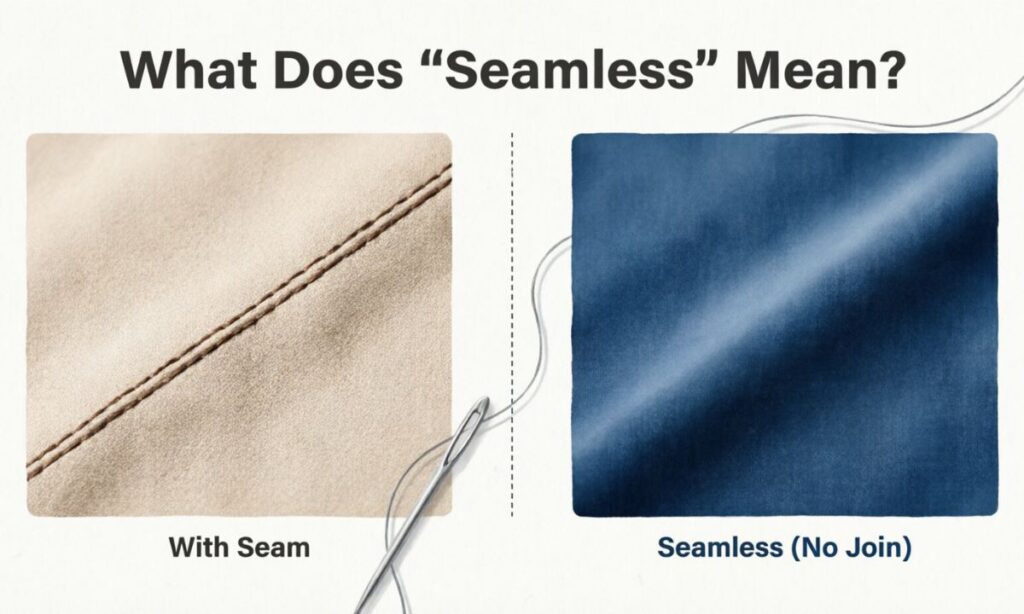
Seamless describes something that flows smoothly without any breaks, gaps, or noticeable joints. Understanding this definition is the first step in mastering seamless vs seemless once and for all. It can refer to a physical object, like a seamless dress with no visible stitching, or it can describe an experience, like a seamless customer service interaction that feels effortless from start to finish.
In modern writing, seamless is used far beyond clothing. It now describes:
- A smooth transition between two ideas or scenes
- Software or technology that works without glitches
- Communication between teams that runs without friction
- A process that feels natural and requires little effort from the user
This broader meaning is exactly why the seamless vs seemless question shows up so often in business writing, tech reviews, and marketing copy.
Common Collocations of Seamless
Certain word pairings appear again and again with seamless. Recognizing these collocations can help you understand correct usage and avoid the seamless vs seemless mistake entirely.
- Seamless integration
- Seamless experience
- Seamless transition
- Seamless connectivity
- Seamless communication
- Seamless workflow
Each of these phrases shows up frequently in technology, customer service, and project management writing.
Is “Seemless” a Real Word?
No. Seemless does not appear in any major dictionary, including Merriam Webster, Cambridge, or Oxford. It is simply a misspelling that happens because of how similar it sounds to the correct word. When people discuss seamless vs seemless, the confusion almost always comes down to pronunciation rather than meaning, since both words are pronounced the same way out loud.
Seamless vs seemless meaning
Seamless carries real meaning: smooth, continuous, and free of interruption. Seemless carries no meaning at all because it is not an accepted word in standard English. If you search for a definition of seemless, you will only find articles explaining that it is incorrect, which confirms that the seamless vs seemless comparison really has only one valid winner.
Seamless synonyms
If you want to vary your vocabulary or avoid repeating seamless too often in a single piece of writing, these synonyms work well:
| Synonym | Best Used For |
| Smooth | General processes or transitions |
| Effortless | Customer experiences |
| Uninterrupted | Workflows or communication |
| Continuous | Ongoing systems or services |
| Flawless | Performances or design |
| Streamlined | Business operations |
Using synonyms naturally also helps your writing feel more polished and reduces the temptation to misspell the word as seemless out of repetition fatigue.
Real-World Examples of Seamless in Context
Seeing seamless used correctly in full sentences makes the seamless vs seemless rule easier to remember. Here are some practical examples:
- The new app update gave users a seamless experience across every device.
- Their team handled the merger with seamless communication between both companies.
- The tailor created a seamless garment with no visible stitching at all.
- Switching internet providers felt seamless thanks to the automatic transfer service.
- The presentation moved from one topic to the next in a seamless way.
None of these sentences would work if you replaced seamless with seemless, because seemless simply does not carry any accepted meaning in English.
Seamless vs Seemless and Professional Writing
In professional settings, spelling accuracy reflects directly on credibility. A resume, business proposal, or client email containing seemless instead of seamless can create doubt about attention to detail. This is one of the biggest reasons the seamless vs seemless distinction matters so much in workplace communication.
Editors, recruiters, and clients often notice small spelling slips before anything else. Getting seamless vs seemless right shows that you care about precision, which builds trust faster than almost any other writing habit. Mastering seamless vs seemless is a small change that creates a noticeably stronger impression.
Memory Tricks to Never Misspell Seamless
If the seamless vs seemless mix up keeps happening to you, try one of these simple memory tricks:
- Picture a seam on a piece of clothing, then imagine it disappearing. No seam equals seamless.
- Remember that seem relates to appearance, like it seems true, while seam relates to stitching.
- Say the phrase without a seam slowly before writing seamless, so your brain links the spelling to the meaning.
- Think of the word seamstress, who works with seams, to anchor the correct spelling in your memory.
Once this association sticks, the seamless vs seemless question stops being a guessing game.
Common Phrases With “Seamless”
Beyond single collocations, full phrases built around seamless appear constantly in everyday and professional writing:
- A seamless blend of old and new design
- Seamless online booking systems
- Seamless data migration
- A seamless user interface
- Seamless customer support
These phrases reinforce just how flexible and widely used the correct spelling truly is.
Seamless in Different Writing Contexts
The word adapts naturally across many fields, which is part of why getting the seamless vs seemless spelling right matters in so many industries.
| Context | Example Usage |
| Technology | The software offers seamless syncing across all devices. |
| Business | Leadership ensured a seamless handover during the transition. |
| Fashion | The brand is known for seamless, stitch free activewear. |
| Travel | The airline promised a seamless check in process. |
| Education | The course provides a seamless learning path for beginners. |
Alternative Words to Use
If seamless starts to feel repetitive in longer pieces, rotate in these alternatives depending on tone:
- Effortless for casual or marketing tone
- Streamlined for business or operational tone
- Smooth for general or conversational tone
- Cohesive for design or creative tone
Common Mistakes and How to Fix Them
Here are the most frequent errors writers make when dealing with seamless vs seemless, along with simple fixes.
- Mistake: Writing seemless because it matches the sound. Fix: Remember the root word seam, not seem.
- Mistake: Relying only on autocorrect to catch the error. Fix: Manually proofread, since some tools miss this mistake.
- Mistake: Using seemless in formal documents without noticing. Fix: Run a final spelling check before submitting any document.
- Mistake: Assuming both spellings are acceptable variants. Fix: Understand that only seamless exists in standard English.
Grammar Check: Seamless vs Similar Words
English has several word pairs that follow a similar sound based confusion pattern to seamless vs seemless.
| Pair | Correct Word | Common Mistake |
| Seamless vs Seemless | Seamless | Seemless |
| Definitely vs Definately | Definitely | Definately |
| Receive vs Recieve | Receive | Recieve |
| Separate vs Seperate | Separate | Seperate |
Read This: Thumb In or Thumb Out? The Safe Fist Guide (2026)
Recognizing this pattern helps you catch similar spelling traps before they appear in your writing.
Printable Quick Reference Box
Save or screenshot this quick reference for seamless vs seemless whenever you need a fast reminder.
- Correct spelling: seamless
- Incorrect spelling: seemless
- Root word: seam, meaning a joining line
- Meaning: smooth, continuous, without interruption
- Memory trick: no seam equals seamless
Frequently Asked Questions
1. What is the correct spelling: seamless or seemless?
Seamless is the correct spelling. Seemless is not a recognized word in standard English.
2. What does “seamless” mean?
It means smooth, continuous, and free of any noticeable breaks, gaps, or interruptions.
3. Can “seemless” ever be used correctly?
No. There is no context in standard English where seemless is the accepted spelling.
4. Are there regional differences between US and UK usage?
No. Both American and British English use seamless, with no regional variation in spelling.
5. How can I avoid this spelling mistake?
Picture the word seam and remember that seamless literally means without a seam.
Conclusion
The seamless vs seemless debate really comes down to one simple fact: only seamless is correct. Seemless is a common misspelling caused by how similar the two words sound when spoken, but it carries no meaning and appears in no dictionary. By remembering that seamless comes from the word seam, paired with simple memory tricks and practical examples, you can confidently avoid this mistake in every email, blog post, or document you write going forward. Now that you understand the full seamless vs seemless comparison, you can write with accuracy and professionalism every single time. The seamless vs seemless mix up will never catch you off guard again.