
If you have ever paused mid sentence wondering whether to write “quizzes” or “quizes,” you are not alone. The debate around Quizzes vs Quizes shows up constantly in student essays, blog posts, emails, and social media captions. This guide breaks down the Quizzes vs Quizes confusion once and for all, using simple grammar rules, real examples, and a quick reference table so you never have to second guess your spelling again.
Quizes or Quizzes – Quick Answer
The correct spelling is quizzes. Quizes is a common misspelling that leaves out a required letter. When people search Quizzes vs Quizes, they usually want a fast, confident answer, so here it is: always write quizzes when referring to more than one quiz.
Quizzes Meaning
Quizzes are short tests, questions, or games used to check knowledge, spark curiosity, or entertain an audience. They appear in classrooms, on apps, in magazines, and across social platforms. Understanding this meaning helps clarify why the Quizzes vs Quizes debate matters so much for writers who want their content to look polished and credible.
Quiz Singular and Quizzes Plural Explained
Quiz is the singular noun, used when talking about one test or question set. Quizzes is the plural, used for two or more. This singular to plural shift is at the center of the Quizzes vs Quizes conversation, since many writers assume the plural simply adds “s” without doubling the final letter.
The Origin of Quizes or Quizzes
The word quiz entered English in the late 1700s, originally describing an odd person or a practical joke rather than a test. Over time its meaning shifted toward questioning and knowledge checks, eventually becoming the classroom and trivia term we know today. As the word grew more common in written English, so did confusion around its plural form, which is exactly why Quizzes vs Quizes remains a frequently searched grammar topic.
Why Is the Plural of Quiz Quizzes?
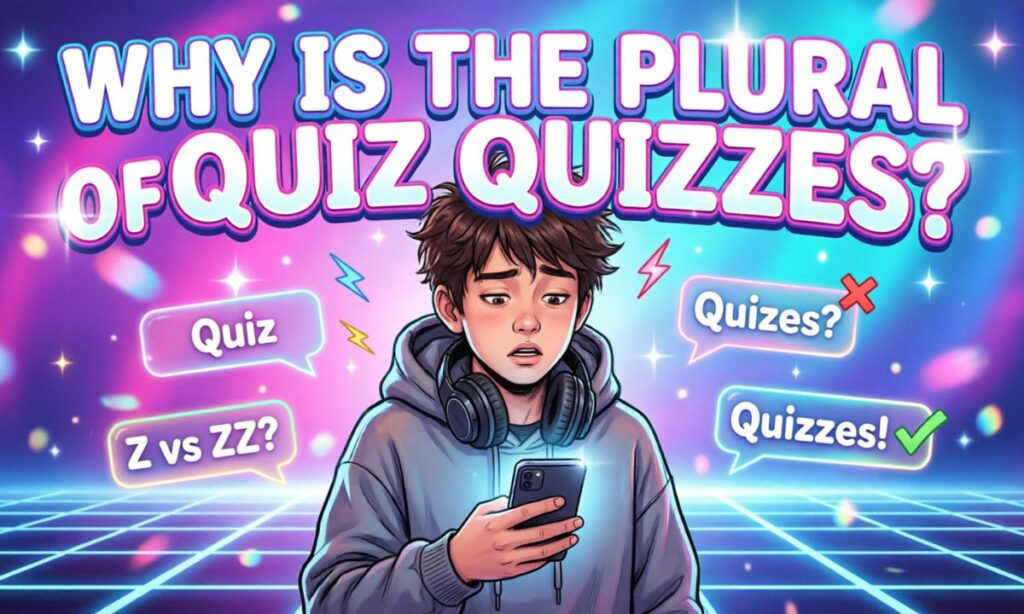
English has a consistent rule for short words ending in a single consonant after a short vowel sound. Quiz fits this pattern perfectly. The final consonant gets doubled before adding “es,” which is why quiz becomes quizzes rather than quizes.
Read This: 22nd or 22th: Which Is Correct? Grammar Explained (2026)
The Spelling Rule Behind Adding “-zes” to Quiz
Here is the simple breakdown behind the Quizzes vs Quizes rule:
- Quiz ends in a single vowel followed by a single consonant (i plus z).
- Words with this short vowel pattern double the final consonant before adding a suffix.
- Since z cannot be followed directly by s in standard English spelling, the plural suffix becomes “es” instead of just “s.”
- The result is quiz + z + es, which gives you quizzes.
This same logic applies to similar words, which is part of why the Quizzes vs Quizes rule feels tricky at first but becomes automatic with practice.
British English vs American English Spelling
Good news for anyone comparing regional spelling habits: the Quizzes vs Quizes question does not change between British and American English. Both varieties treat quizzes as the only correct plural form.
| Spelling Variety | Correct Plural | Notes |
| British English | Quizzes | No regional variation |
| American English | Quizzes | No regional variation |
| Australian/Canadian English | Quizzes | Follows the same doubling rule |
Unlike words such as colour and color, the Quizzes vs Quizes debate has nothing to do with regional dialects. It is purely a spelling rule issue, not a British vs American difference.
Plural of Quiz According to Oxford Dictionary
Oxford Dictionary, along with every other major English dictionary, lists quizzes as the sole accepted plural of quiz. Quizes does not appear as an alternate or informal spelling anywhere in standard reference sources, which settles the Quizzes vs Quizes question from an authoritative standpoint.
Which Spelling Should You Use?
Always use quizzes. There is no context, formal or casual, where quizes is considered acceptable. Whenever the Quizzes vs Quizes topic comes up in writing groups or classrooms, the answer stays the same across every situation.
Use Quizzes for:
- School and university assessments
- Online trivia and personality tests
- Marketing quizzes on websites and social media
- Employee training modules
- News quizzes and current events tests
- Language learning apps and platforms
Common Mistakes with Quizes or Quizzes
Writers exploring Quizzes vs Quizes often run into a few repeat errors:
- Writing “quizes” by forgetting to double the z
- Using “quiz’s” as a plural, which is actually a possessive form
- Mixing quizzes and quizes inconsistently within the same document
- Assuming British spelling changes the plural form
- Relying on autocorrect, which does not always flag the error in casual writing tools
Avoiding these mistakes keeps your content clean and professional, especially if you publish regularly online where spelling errors can hurt credibility.
Quizes or Quizzes in Everyday Examples
Seeing real examples helps cement the Quizzes vs Quizes rule in everyday writing.
“Please complete the attached quizzes before Friday’s deadline.”
News
“The outlet published a series of quizzes testing readers on current events.”
Social Media
“Try our fun new quizzes and share your results in the comments.”
Formal Writing
“Weekly quizzes were used to measure student comprehension throughout the semester.”
Education Platforms
“Interactive quizzes on the app help learners track their progress in real time.”
Across every one of these contexts, the Quizzes vs Quizes answer stays identical: quizzes is always correct.
Different Types of Quizzes and Their Uses
Quizzes are not limited to classrooms. They show up in many formats, and each one plays a slightly different role.
Online Quizzes
These cover everything from trivia games to marketing lead generation tools, often used to boost engagement on websites and social platforms.
Quizzes for Students
Teachers use short quizzes to check comprehension quickly, reinforce lessons, and prepare students for larger exams without heavy grading loads.
Fun Quizzes and Entertainment
Personality tests, pop culture trivia, and buzzworthy social quizzes fall into this category, designed purely for enjoyment and sharing.
Quizzes Apps and Digital Quiz Platforms
Many platforms now specialize in building and hosting quizzes for education, marketing, and entertainment. Popular categories include:
- Learning management systems with built in quiz modules
- Trivia apps for casual entertainment
- Marketing quiz builders used for lead capture
- Classroom response tools that generate instant quizzes
Every one of these platforms uses the spelling quizzes consistently, reinforcing how settled the Quizzes vs Quizes question really is across the tech industry.
Quizes or Quizzes – Google Trends & Usage Data
Search behavior shows a clear pattern. While people occasionally search the incorrect term quizes, the correct spelling quizzes dominates search volume worldwide, especially in education, entertainment, and marketing niches. This gap highlights why so many grammar guides tackle Quizzes vs Quizes directly, aiming to correct a widespread but avoidable habit.
Comparison Table: Quizes vs Quizzes
| Feature | Quizes | Quizzes |
| Correct spelling | No | Yes |
| Dictionary recognized | No | Yes |
| Used in formal writing | No | Yes |
| Used in British English | No | Yes |
| Used in American English | No | Yes |
| Follows doubling rule | No | Yes |
This table makes the Quizzes vs Quizes comparison easy to reference whenever doubt creeps back in.
Conclusion
The Quizzes vs Quizes debate has a clear and consistent answer. Quizzes is the only correct plural of quiz, supported by dictionaries, grammar rules, and everyday usage across British and American English alike. Whether you are writing a classroom assessment, a marketing quiz, or a casual social media post, remembering the simple doubling rule behind Quizzes vs Quizes will keep your writing accurate and polished every single time.